Mutual inhibition, not mutual sabotage.
The default objective is zero launch: no weapon fired, including in retaliation, until human authority has survived the warning process.
Public bilingual research release · v1.0
The safest system is not the fastest one, but the one whose structures force it to slow down before the button.
Broadcast 003 · Human authority and dignity · EN 52:45 · VI 22:01
A second full-length listening companion to The M.I.A.M. Doctrine—on the human authority that must remain non-delegable when machine judgment enters an irreversible decision.
Phẩm giá con người thời AI đặt câu hỏi tương ứng từ phía con người: phẩm giá, trách nhiệm và quyền quyết định nào tuyệt đối không thể bị tự động hóa.
Why Human Authority Cannot Be Automated · 52:45
Download English M4A ↓Phẩm giá con người thời AI · 22:01
Tải bản M4A tiếng Việt ↓Broadcast 002 · Full-length audio · 49:03
The listening companion to The M.I.A.M. Doctrine—a spoken journey through mutual inhibition, preserved human authority and the discipline of slowing down before the nuclear button.
Bản nghe đồng hành cùng Học thuyết M.I.A.M.—từ kiềm chế lẫn nhau, thẩm quyền con người đến kỷ luật buộc hệ thống phải chậm lại trước nút bấm hạt nhân.
A Nail Tech Rewrites Nuclear AI Strategy · 49:03
Download English M4A ↓Thợ nail phản biện AI hạt nhân · 23:16
Tải bản M4A tiếng Việt ↓01 · The strategic reversal
“Souvenir Intelligence” names an intelligence disciplined to preserve a world that can still be remembered by living witnesses—not one reduced to ash with no one left to record it.
M.I.A.M. begins where machine-speed strategy becomes most dangerous: the interval in which warning, recommendation, authorization, and irreversible force can collapse into one another.
The doctrine follows the three-part architecture of the 2025 MAIM proposal, then places a counter-principle against each pillar. Its concern is not only who may dominate advanced intelligence. It is whether an attempt to prevent domination—or a false alarm about it—can become the last day of the world.
The default objective is zero launch: no weapon fired, including in retaliation, until human authority has survived the warning process.
The protected object is not only the weapon or model. It is the decision itself, which must not pass silently from human hands into a machine’s.
Safety is produced by architecture: pauses, independent corroboration, and authority checks that remain effective under pressure.
02 · MAIM / M.I.A.M.
MAIM’s zero is strategic paralysis: no actor can pull decisively ahead. M.I.A.M.’s zero is operational non-occurrence: the button is not pressed.
03 · Objections in the record
The doctrine treats objections as part of the architecture, not as decoration added after the conclusion.
The paper distinguishes delay from paralysis: designed friction can preserve credible authority while preventing an automated rush from warning to launch.
M.I.A.M. rejects a ceremonial human role. Authority must be operationally current, independently informed, and able to stop the sequence before irreversibility.
The burden shifts from trusting intentions to inspecting procedures: corroboration paths, pause conditions, delegation boundaries, and accountable release authority.
04 · Complete bilingual web edition
Đang mở toàn văn tiếng Việt…
Opening the complete English text…
05 · Bilingual reader editions
Both reader editions are public under one canonical research record and one DOI.
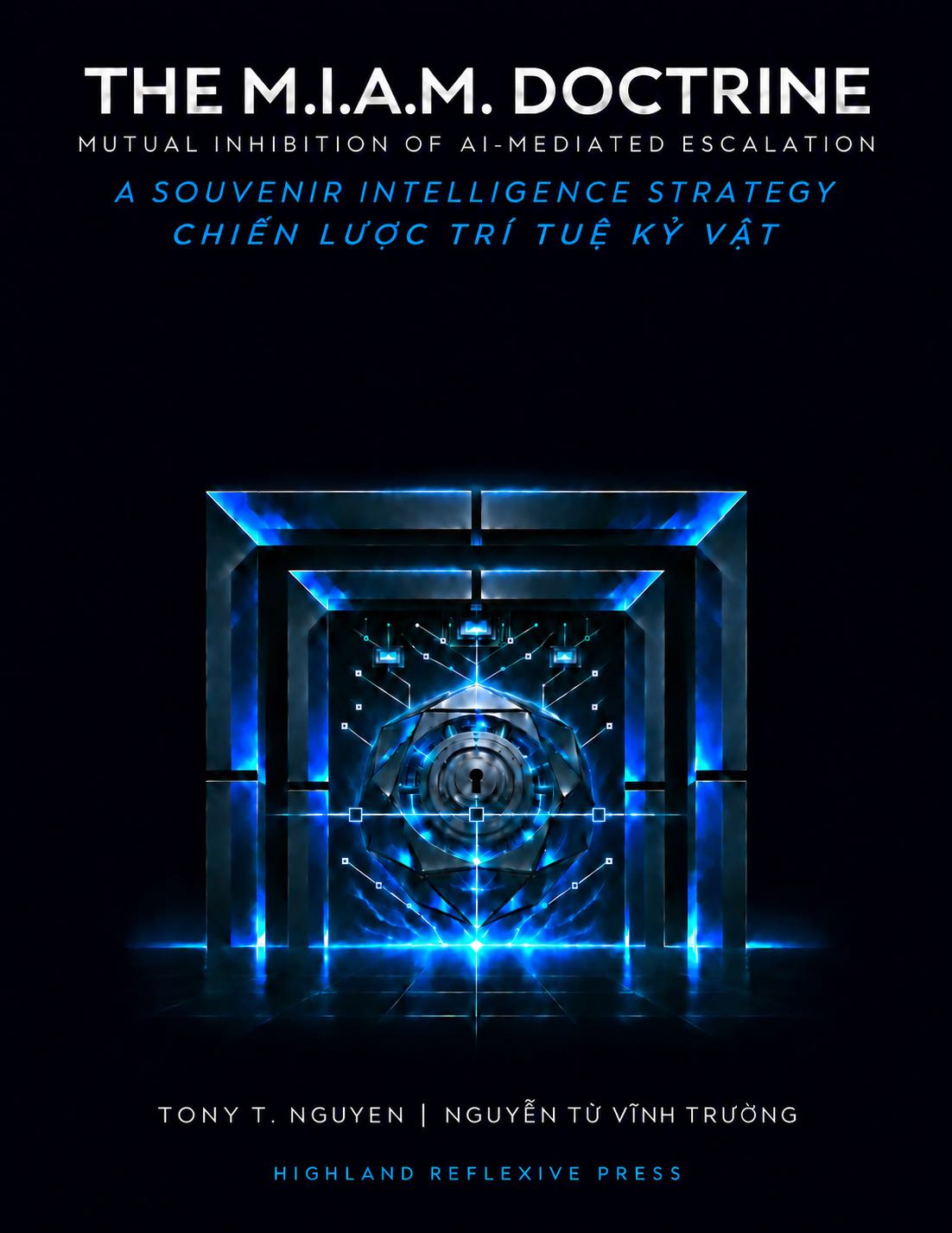
Mutual Inhibition of AI-Mediated Escalation — A Souvenir Intelligence Strategy.
Open English PDF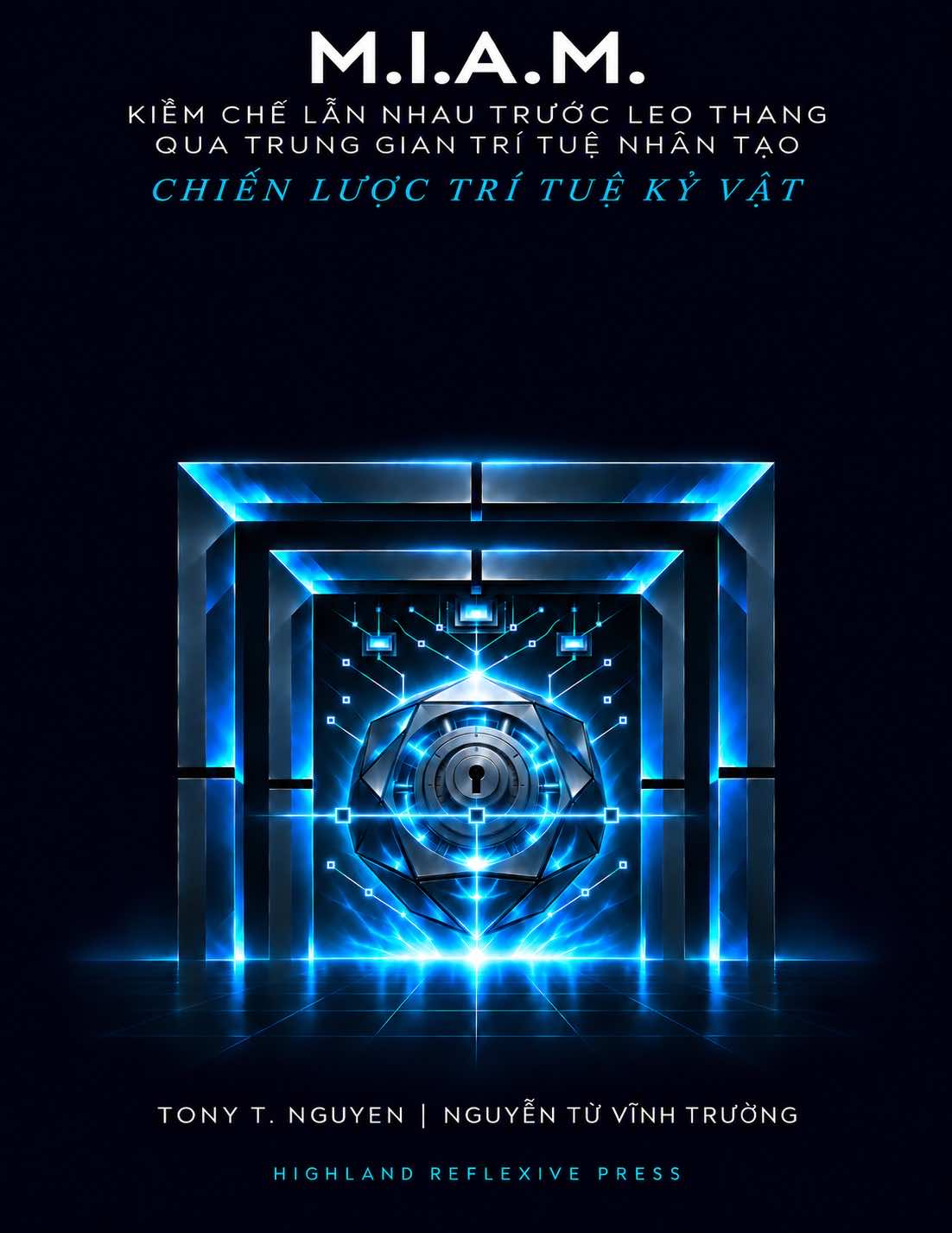
Kiềm chế lẫn nhau trước leo thang qua trung gian trí tuệ nhân tạo — Chiến lược Trí tuệ Kỷ vật.
Mở bản PDF tiếng Việt06 · Canonical record
This page and both updated PDFs identify the work as HRP–RN–013, version 1.0. The DOI continues to identify the canonical research record.
Nguyen, Tony T. (Nguyễn Từ Vĩnh Trường). (2026). The M.I.A.M. Doctrine: Mutual Inhibition of AI-Mediated Escalation—A Souvenir Intelligence Strategy (Version 1.0). Highland Reflexive Press. https://doi.org/10.5281/zenodo.24215109
Authorship & AI assistance. Tony T. Nguyen originated the doctrine, governing distinctions, argument, and final publication decisions. Generative AI materially assisted comparison, analytical development, drafting, editorial preparation, and production under the author’s direction. Responsibility for the claims and final text remains with the human author.